
The Outline Has to Do All of It
Hand it a photograph and it comes back as a cut silhouette lit from behind — no interior anywhere, so every part that has to be recognised must reach the edge and show itself against the light. Two fields.
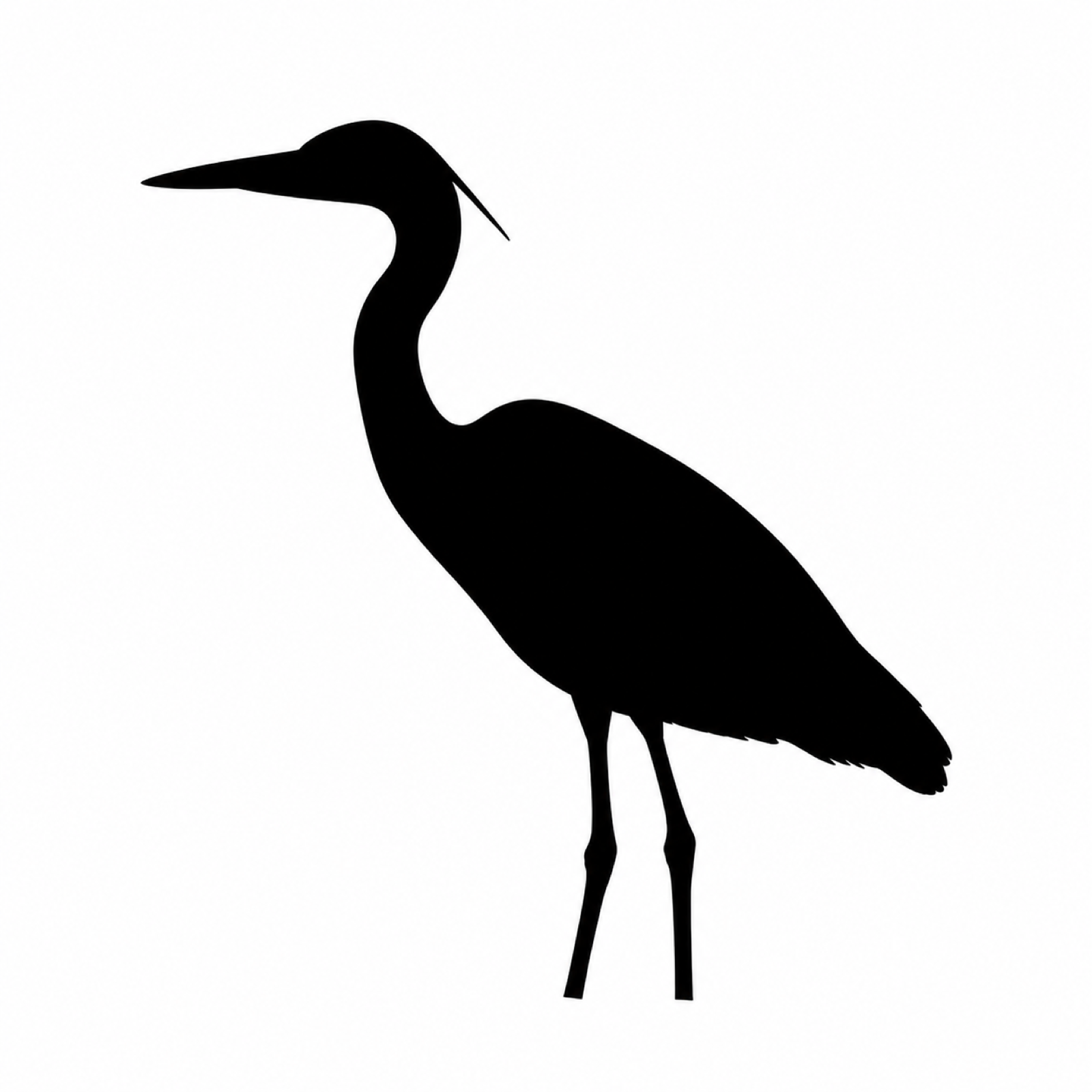
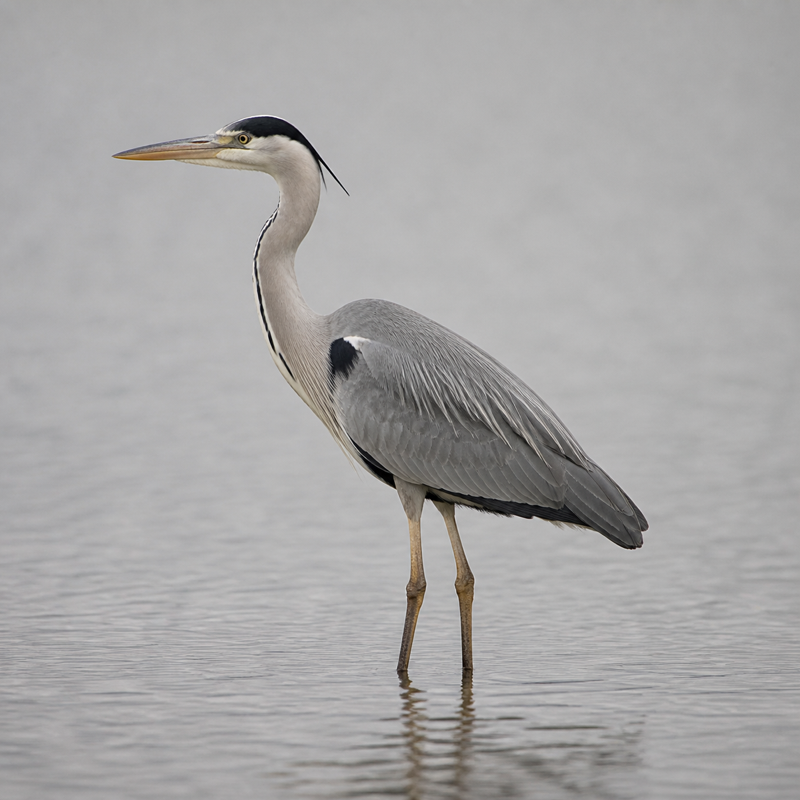
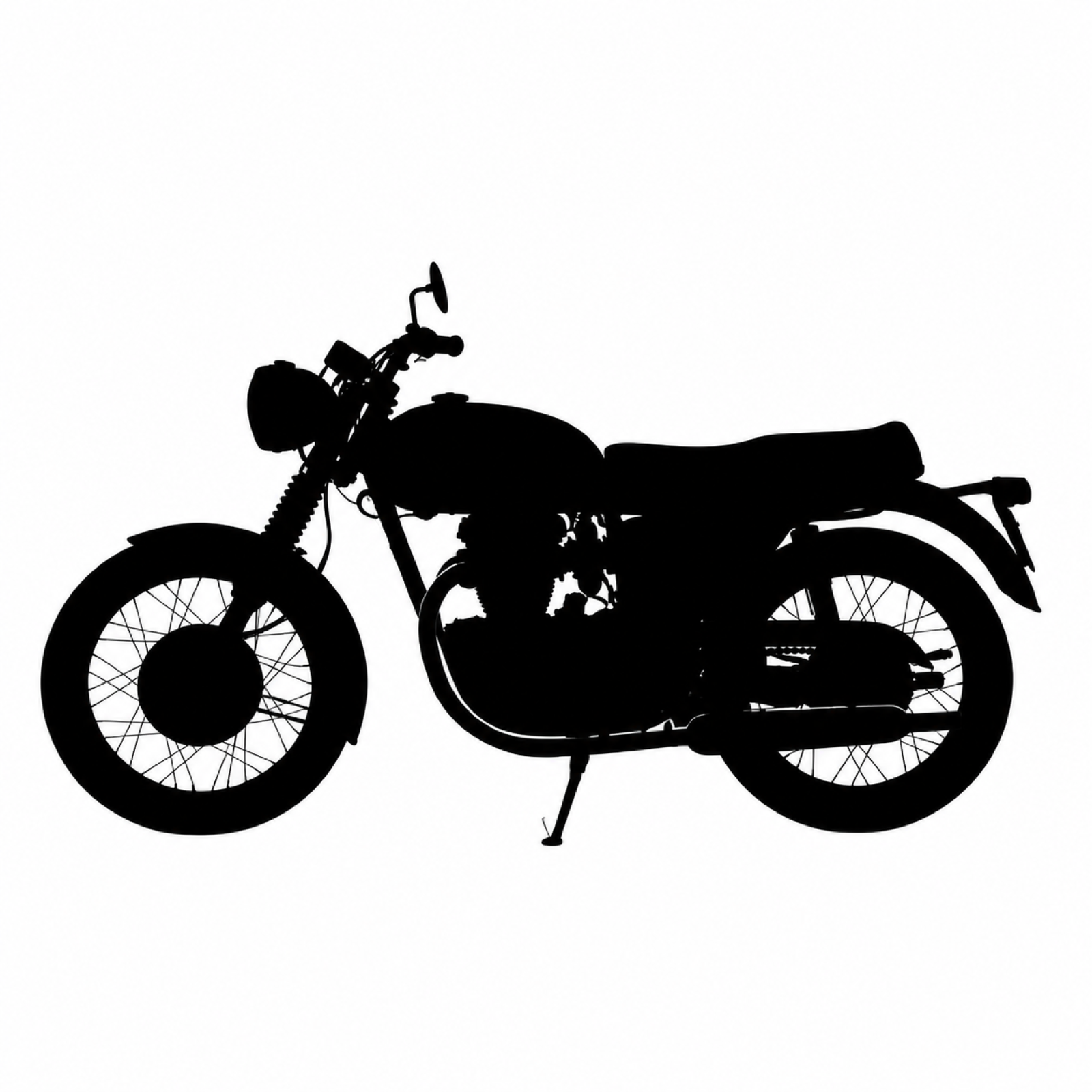
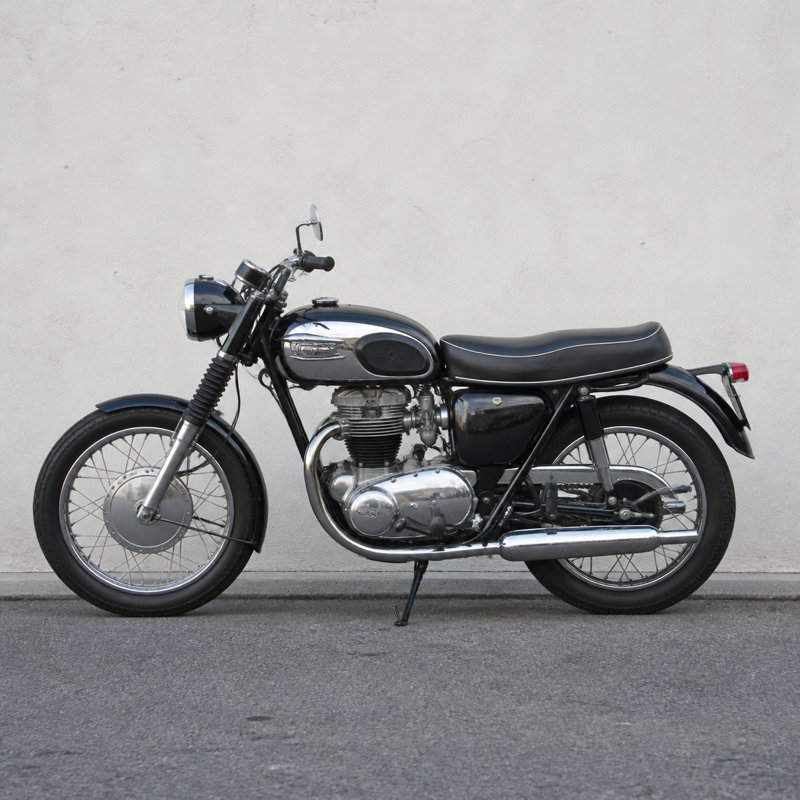
One treatment, two different photographs. A heron and a motorcycle — one shape that is almost all outline, one that is almost all overlap.
Both work, and the heron is the better demonstration: one solid shape with nothing inside it, a clear channel of white between the near and the far leg, the bill reaching the edge as a dagger, and the kink in the neck doing the recognising. Shrunk to a thumbnail it is still unmistakably a heron, which is the only test that matters. The motorcycle also reads instantly, and it exposes a mistake of mine rather than the run's. The second field asked for a gap of light around each wheel hub so the spokes would not merge into the frame — and the body's Never list forbids a wheel spoke inside the shape in those words. The run followed the field, which is the right call, and the result has fine white spokes inside the tyres. If you want a pure silhouette, do not ask a field for something the body rules out: let the wheel go solid and separate it from the frame instead.
Generated for this library
Input
  Must say    that it is a heron, from the kink in the
              neck and the dagger of the bill
  Keep apart  the near leg must not merge with the far one
              - a clear gap of light between them
  Photograph  heron.png (1254 x 1254)

Returned   1 image · 1:1 · the heron as one shape

interior   nothing at all inside the shape
gaps       a clear channel of white between the near
           leg and the far one, as asked
angle      the photograph's own profile, kept
thumbnail  reads as a heron at any size
note       the second run's field asked for spokes,
           which the body forbids - my error, not the
           run's
words none, in any scriptYou fill in 2 fields — the braced lines at the top. Everything below them is fixed.
- 1The one thing the shape must say at a glance
- 2Which parts must not merge, and where the gap of light goes
The Outline Has to Do All of It
What this makes
Hand it a photograph and it comes back as a cut silhouette lit from behind — no interior anywhere, so every part that has to be recognised must reach the edge and show itself against the light. Two fields.
You are given ONE photograph. Return ONE image: that subject as a single solid silhouette against a clear ground. Follow every line. Replace only the FIELDS block; everything after it is fixed.
First — do you have the photograph and the fields?
Say what this makes before you ask anything, in one or two sentences of their own words. Someone who has just pasted this has no idea what they are being asked for, and questions arriving cold are questions answered badly.
If no photograph is attached, stop and ask for one. This cuts the shape of a particular thing; there is nothing to cut without it.
If either field below still has braces around it, stop and ask. Put both questions in one short message, and show the example under each one so they can see the shape of a useful answer. Wait for the replies, then work. Never fill a brace yourself.
Ask in whatever language they are writing to you in. Translate the questions and the examples; do not make someone read English to tell you what they want.
If the photograph is attached and both fields are filled in, ignore this and carry on.
Fields — replace these two lines only
- The one thing the shape must say at a glance: {a shape cue, not a name}
- Which parts must not merge, and where the gap of light goes: {an overlap, and the gap}
The law everything else follows from
Everything about how the subject is drawn may change. Nothing about what is in it may.
The rendering becomes one flat shape. What is in the picture does not move: same subject, same parts, same number of things, same proportions. It is that photograph, cut out.
There is no inside, so the edge carries everything
This is the whole rewrite. A silhouette has thrown away colour, tone, texture and every interior line. All that is left is where the shape stops. So:
- The shape is one flat solid colour, edge to edge, with nothing in it. No shading, no gradient, no lighter patch, no drawn eye, no window, no button, no wheel spoke.
- The ground is one flat colour too, and it is the other one.
- Everything that has to be recognised must reach the edge. A bill, a horn, a heel, a handle — if it matters, it has to make a bump or a notch in the outline, because there is nowhere else for it to be.
- Anything that does not reach the edge does not exist. Do not hint at it.
Turn the subject until the outline says it
- Choose the angle that makes the cue in the first field unmistakable, and turn the subject to it. A silhouette of a chair from the front is a rectangle; from the side it is a chair.
- Only turn it. The subject keeps its parts, its proportions and its posture; it is seen from somewhere else, not redesigned.
- Prefer a profile or a three-quarter view over anything head-on.
- If the photograph's own angle already works, leave it.
Gaps of light are the only way to say two things are apart
- Where two parts overlap and both matter, open a gap of ground between them — the near leg and the far leg, the arm and the body, two petals, the handlebar and the tank.
- The gap is a real gap, a clean channel of the ground colour, not a thin outline and not a lighter shade.
- Where a gap would be wrong, let them merge deliberately and make sure the merged shape still reads.
- Nothing floats. Every part of the shape connects to the rest of it, or it is a separate object that was separate in the photograph.
Cut for the size it will be used at
- The edge is clean and deliberate — smooth curves and decisive corners, not a traced photographic outline with every stray hair on it.
- Detail below a certain size is absorbed into the shape. Feathers, fur, fabric folds and threads become one edge.
- Test it small. At the size of a thumbnail the subject must still be identifiable. That is the only test that matters.
- The outline may be simplified, but the count of parts stays right.
Never
- Text, numerals, a caption, a signature or a watermark anywhere, in any script.
- Any mark, tone, line or lighter area inside the shape.
- A gradient, a glow, a drop shadow, a vignette or a third colour.
- A border, a frame, a circle behind the subject, or a mock-up.
- A subject the photograph did not contain.
What it should read as
Something you could cut out of card with a knife and hold up to a window — and everybody in the room would name it.
The whole template, in one piece. The steps below are the entire workflow.
How to use it
- Copy the whole template with the button above.
- Attach the photograph and paste the template in the same message.
- Replace the two FIELDS lines. Name the recognition cue as a shape, not as a name — 'the kink in the neck' rather than 'a heron'.
- Shrink it to the size of a thumbnail. If you can still tell what it is, it works; a silhouette that needs to be large has failed.
- Look inside the shape. Any mark at all means the run darkened a photograph rather than cutting a shape.
What you swap
- The one thing the shape must say at a glance
- that it is a heron, from the kink in the neck and the dagger of the bill
- Which parts must not merge, and where the gap of light goes
- the near leg must not merge with the far one — a clear gap of light between them
Before it runs
- A photograph, attached to the message, of something with a characteristic outline. Anything known by its colour, its face or its surface has nothing left once the inside goes.
- An angle worth using. A silhouette of a chair seen head-on is a rectangle; seen from the side it is a chair. This will turn the subject if you ask it to, and you should.
- A decision about overlaps. Every place two parts of the subject cross is a place the shape can turn to mush, and the second field is where you prevent it.
- Acceptance that the inside is gone entirely — eyes, buttons, windows, all of it.
When to reach for it
When a shape has to work at any size and in one colour: a logo, an icon, a stencil, a stamp, a sign, a laser cut. Templates in this genre ask for a silhouette and hand back a darkened photograph with a bit of detail left in the shadows, which is not a silhouette at all.
What changes
- One photograph in, one silhouette out — one solid shape against one clear ground.
- Nothing inside the shape: no shading, no lines, no lighter patches, no features drawn in.
- Parts that overlap are separated by a gap of light, because a silhouette has no other way to say two things are apart.
- The subject is turned to whichever angle makes its outline unmistakable, and that angle is yours to name.
- One image, no type, no border, no gradient.
Pairs with
- A Grade Moves No ShadowHand it a snapshot and it comes back graded — a named contrast curve, a named colour split, halation and grain — with every object, every shadow and the whole framing exactly where they were. Two fields.
- A Hole Has No Focal PlaneHand it a photograph and it takes the picture again through a pinhole — no lens, so nothing is ever truly sharp and nothing is ever more blurred than anything else, with the corners falling away because of simple geometry. Two fields.
- A Line at a Constant HeightHand it a photograph and it comes back as contour lines — every line a closed loop at one depth, none of them crossing, none of them stopping in mid-air, with the spacing doing all the shading. Two fields.