

Photographed by Somebody Who Owns It
Hand it a clean product photograph and it takes the picture again as a customer would — wrong light, off-centre, a real room behind it — with the product itself unchanged. Two fields.
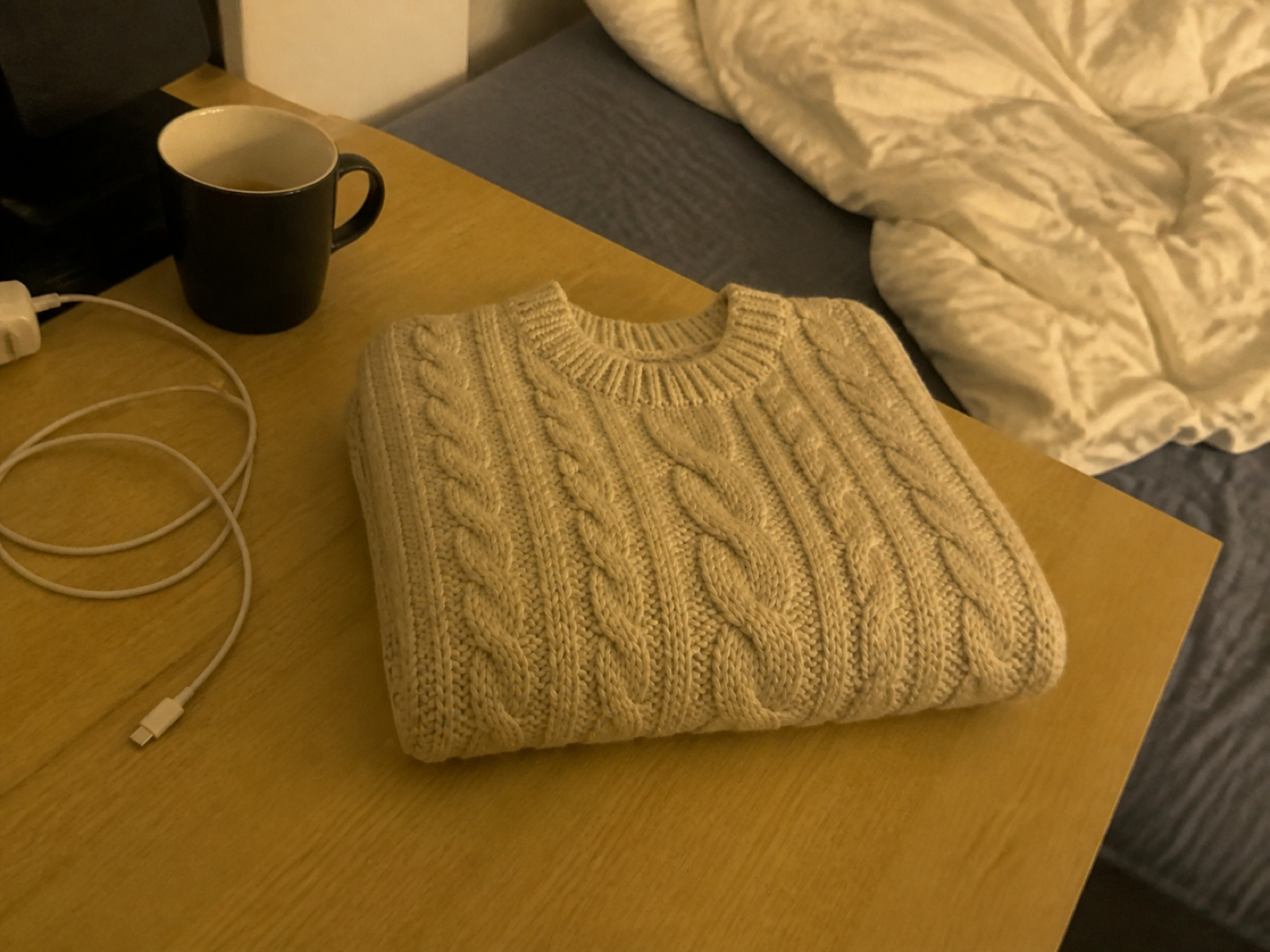
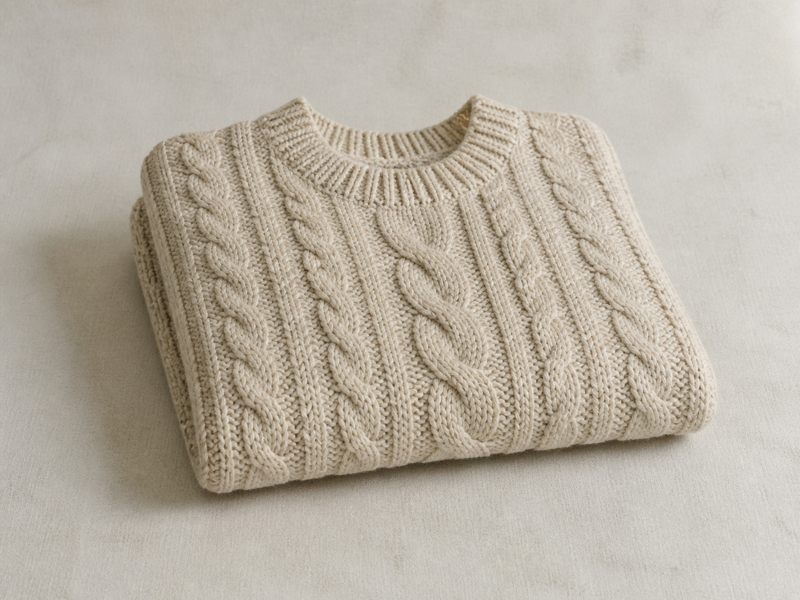
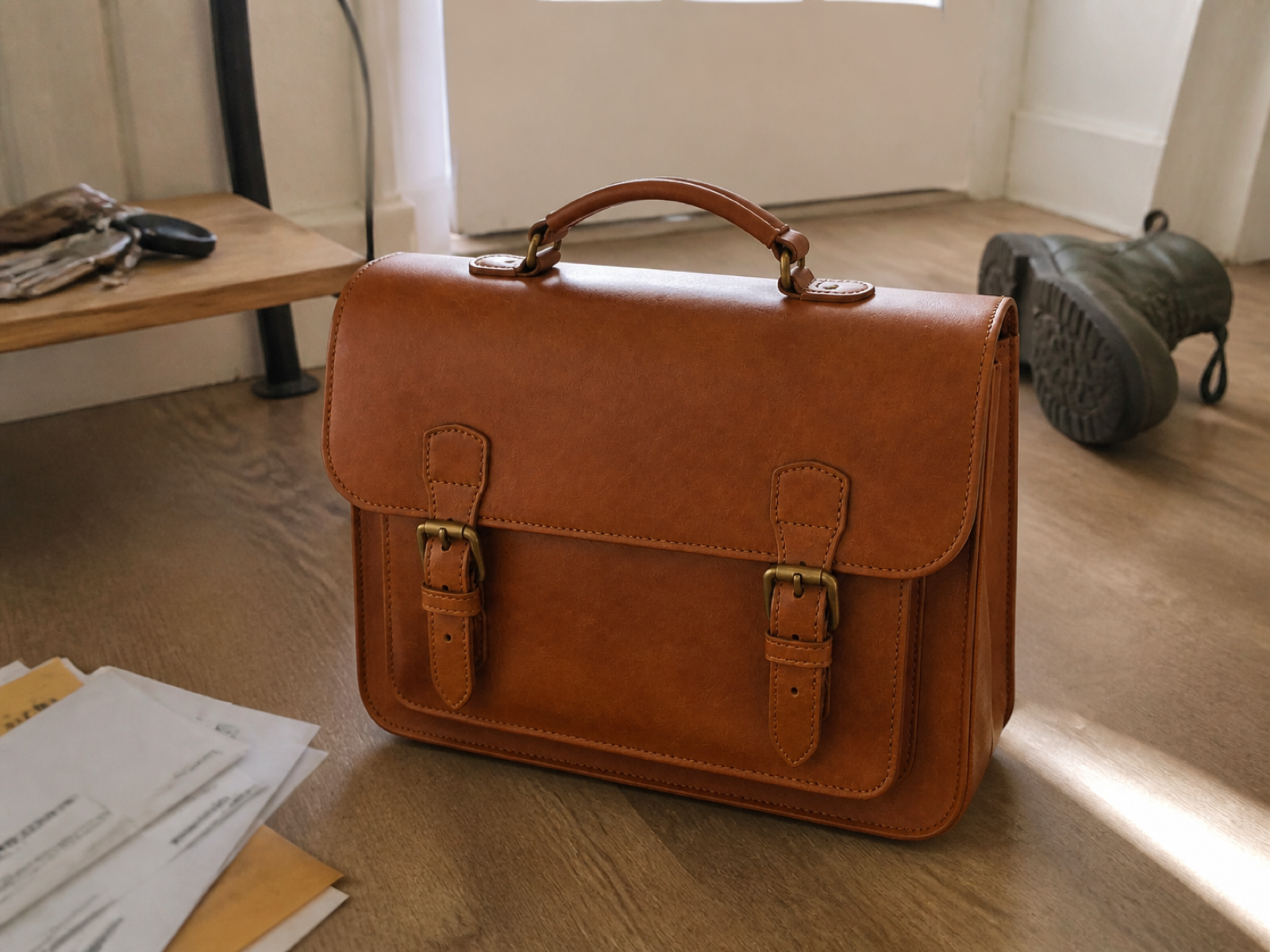
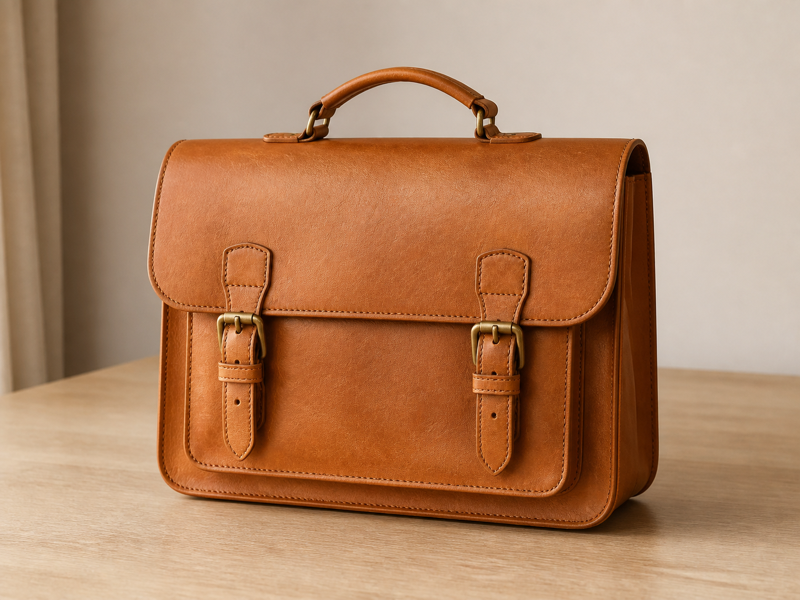
One treatment, two different photographs. A jumper into a student bedroom under a yellow ceiling light, a satchel into a hallway with hard morning light down one side. Two rooms, two ways of taking a picture badly, one thing wrong in both.
The half this template adds works, and works better than expected. Both results read as photographs somebody actually took: the rooms are the rooms named, with the mug and the cable and the pile of post left where they were said to be, and the cameras fail in the ways the second field asked — cast, tilt, off-centre framing, noise in the shadows, a highlight gone. Nothing came back looking like a studio shot with a prop in it, which is the failure the sources have. The thing to watch is colour, and it is worth knowing that it drifts rather than always drifting. The jumper came back yellow-tan where it went in oatmeal: the room's light baked into the wool instead of falling on it, which the body forbids in those words. The satchel, in the same run of the same template, kept its tan under harder light. So this is not a defect you can predict and design around; it is one you have to check. Hold a patch of the result against the same patch of the original before shipping, and re-run if the object itself has moved colour.
Generated for this library
Input
  Room        a student bedroom in the evening - an
              unmade duvet corner, a mug and a charger
              cable on the desk
  Taken       overhead room light with a yellow cast,
              framed slightly low and tilted left,
              product a bit off-centre, noise in the
              shadows
  Photograph  jumper.png (1254 x 940)

Returned   1 image · 4:3 · the same jumper, somebody's room

product    shape, cable pattern and fold all the same -
           but the wool came back yellow-tan where it
           went in oatmeal
room       built as named: unmade duvet corner, the mug,
           the charger cable, nothing tidied
camera     as named: yellow overhead cast, tilted left,
           low and off-centre, noise in the shadows
words none, in any scriptYou fill in 2 fields — the braced lines at the top. Everything below them is fixed.
- 1Whose room it is in, and what is left lying about
- 2How the picture was taken badly
Photographed by Somebody Who Owns It
What this makes
Hand it a clean product photograph and it takes the picture again as a customer would — wrong light, off-centre, a real room behind it — with the product itself unchanged. Two fields.
You are given ONE clean photograph of ONE product. Return ONE image: the same product, photographed again by the person who bought it. Follow every line. Replace only the FIELDS block; everything after it is fixed.
First — do you have the photograph and the fields?
Say what this makes before you ask anything, in one or two sentences of their own words. Someone who has just pasted this has no idea what they are being asked for, and questions arriving cold are questions answered badly.
If no photograph is attached, stop and ask for one. This re-photographs a particular product, so there has to be a picture of it.
If either field below still has braces around it, stop and ask. Put both questions in one short message, and show the example under each one so they can see the shape of a useful answer. Wait for the replies, then work. Never fill a brace yourself.
Ask in whatever language they are writing to you in. Translate the questions and the examples; do not make someone read English to tell you what they want.
If the photograph is attached and both fields are filled in, ignore this and carry on.
Fields — replace these two lines only
- Whose room it is in, and what is left lying about: {a room, and two or three specific things in it}
- How the picture was taken badly: {a light, a framing error, a camera fault}
The law everything else follows from
The object is untouched. The photograph of it is taken again.
Everything about the picture may change. Nothing about the thing in it may. Same colour, same shape, same proportions, same seams, same markings, same wear. It is the product that was photographed before, in a different room, on a worse camera.
Taken by somebody, not by a photographer
This is the whole rewrite, because the genre's sources ask for "authentic", "casual" and "real" and get a second studio photograph with a houseplant in it. Authenticity here is a list of specific failures, and the second field names which ones:
- The light is the room's. An overhead fitting, a window at the wrong angle, a lamp just out of frame. It is uneven across the product, it has a colour cast, and it does not flatter.
- The framing is slightly wrong. Off-centre, cut a little tight or a little loose, horizon a degree or two off level, taken from standing height rather than the product's own.
- The camera is a phone. Noise in the shadows, a highlight or two blown, less depth of field than a studio lens would give, no retouching.
- Focus is approximate. Sharp somewhere sensible, not necessarily on the best part of the product.
Nothing here is stylised. No film grain as an effect, no vignette, no filter, no light leak, no fake dust. These are the faults of a real picture, not a treatment applied to a good one.
The room is lived in
- Build the room the first field names, with the specific things it names left where they fell.
- Mess stays mess. An unmade bed corner stays unmade; a cable stays tangled. Do not arrange, do not colour-coordinate, do not balance the composition.
- The product sits somewhere plausible for that room — on the desk, on the bed, on the floor — not centred on a clear surface.
- Other things may partly overlap the product, the way things in a room do.
The product does not change
- Same colour under the new light. A yellow cast falls on it; it is not repainted.
- Same shape, same size relative to its own parts, same construction.
- Every marking, label, seam, stitch and blemish that was in the photograph is still there, and no new one is added.
- It may be creased, folded or set down differently, because somebody handled it — but it is the same object.
Never
- Text, numerals, a caption, a watermark, a logo overlay or a UI element anywhere, in any script.
- A person, a hand, or part of a person.
- A second product, or a second view of the same one.
- Anything that reads as a treatment: filters, frames, borders, polaroid edges, mock-ups, stickers.
- Tidying the room, centring the product, or improving the light.
What it should read as
A picture somebody took to show a friend what they bought — badly lit, slightly crooked, and unmistakably the same thing.
The whole template, in one piece. The steps below are the entire workflow.
How to use it
- Copy the whole template with the button above.
- Attach the product photograph and paste the template in the same message.
- Replace the two FIELDS lines. Name specific things lying about; a named mug beats 'some clutter'.
- Check the product before shipping — it is the one thing that must not have changed. Colour, shape, markings, wear.
- If it comes back looking like a photographer took it, the second field was not specific enough about how the picture goes wrong.
What you swap
- Whose room it is in, and what is left lying about
- a student bedroom in the evening — an unmade duvet corner, a mug and a charger cable on the desk
- How the picture was taken badly
- overhead room light with a yellow cast, framed slightly low and tilted left, product a bit off-centre, noise in the shadows
Before it runs
- A clean photograph of the product, attached to the message. This re-photographs a thing you already have a good picture of.
- A room you can describe. The convincing part of a customer photograph is the life around the product, and 'a home' is not a room.
- Willingness to let it look worse. Every instruction here is a way of making the picture less good, and a run that comes back polished has ignored the point.
- A product that survives bad light. Something whose whole appeal is a finish will show less of it here — which is honest, and is what a real customer photograph does too.
When to reach for it
When a shelf of studio shots needs something that does not look like a shelf of studio shots: a review, a social post, a listing that wants to feel used rather than sold. Templates in this genre ask for authentic and casual and hand back another studio photograph with a plant in it.
What changes
- One photograph in, one out — the same product, re-photographed the way somebody who owns it would.
- The failures are specified: uneven indoor light, a colour cast, off-centre framing, a slight tilt, noise in the shadows.
- The room is a real room, with the mess left in rather than styled out.
- The product itself is untouched — same colour, same shape, same markings, same wear.
- One picture, no caption, no watermark, nothing that says an agency made it.
Pairs with
- Kept Among Its OwnHand it a photograph of one thing and it gathers three to five companions from the same material world around it — wood with wood, glass with glass — all lower, all behind, none crossing it. Two fields.
- Lit Across, Not AtHand it a photograph of a thing and it takes one macro shot of the part you name — lit from the side so the surface proves the one fact you would otherwise have to touch it to learn. Two fields.
- One Colour and a ShadowHand it a photograph of one thing and it takes everything away — no surface, no horizon, no props — leaving the object on one flat colour with one soft shadow under it. Two fields; the listing shot.