
One Tube, Bent in One Piece
Hand it a photograph and it comes back as a neon sign — drawn only in paths a glassblower could actually bend, with every run of tube ending at an electrode and lighting the wall it hangs on. Two fields.
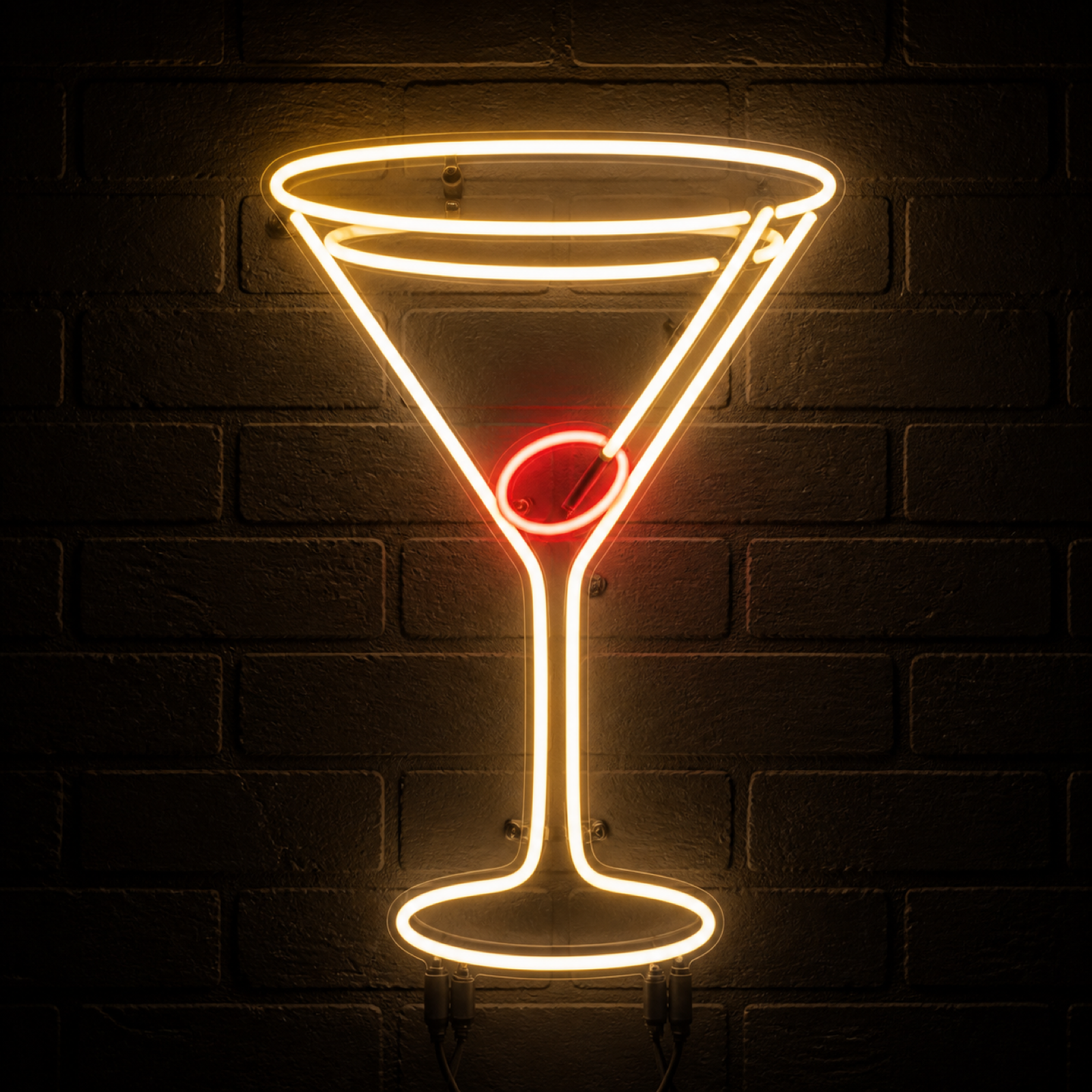
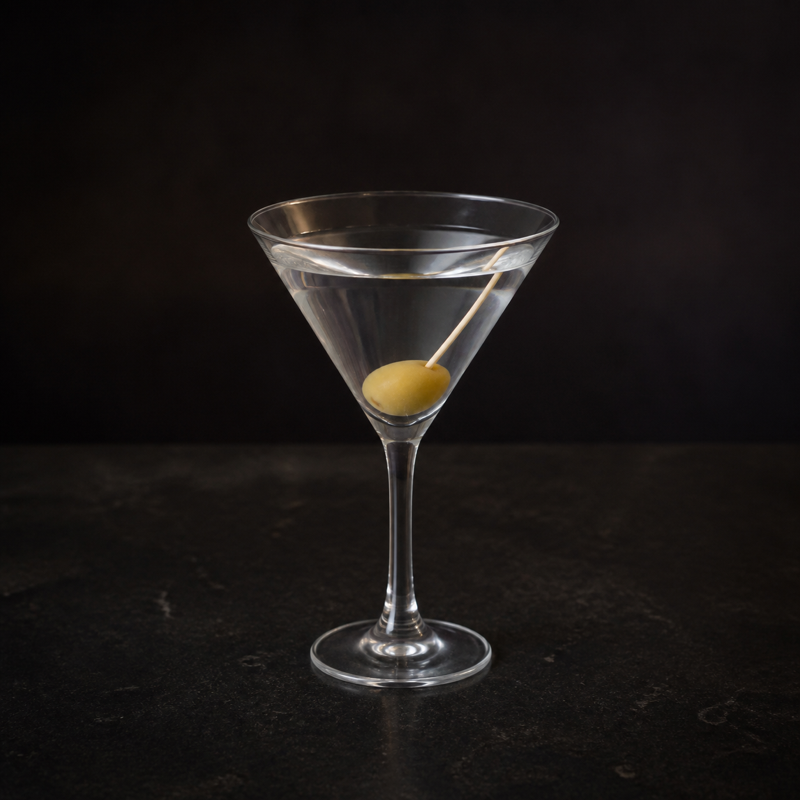
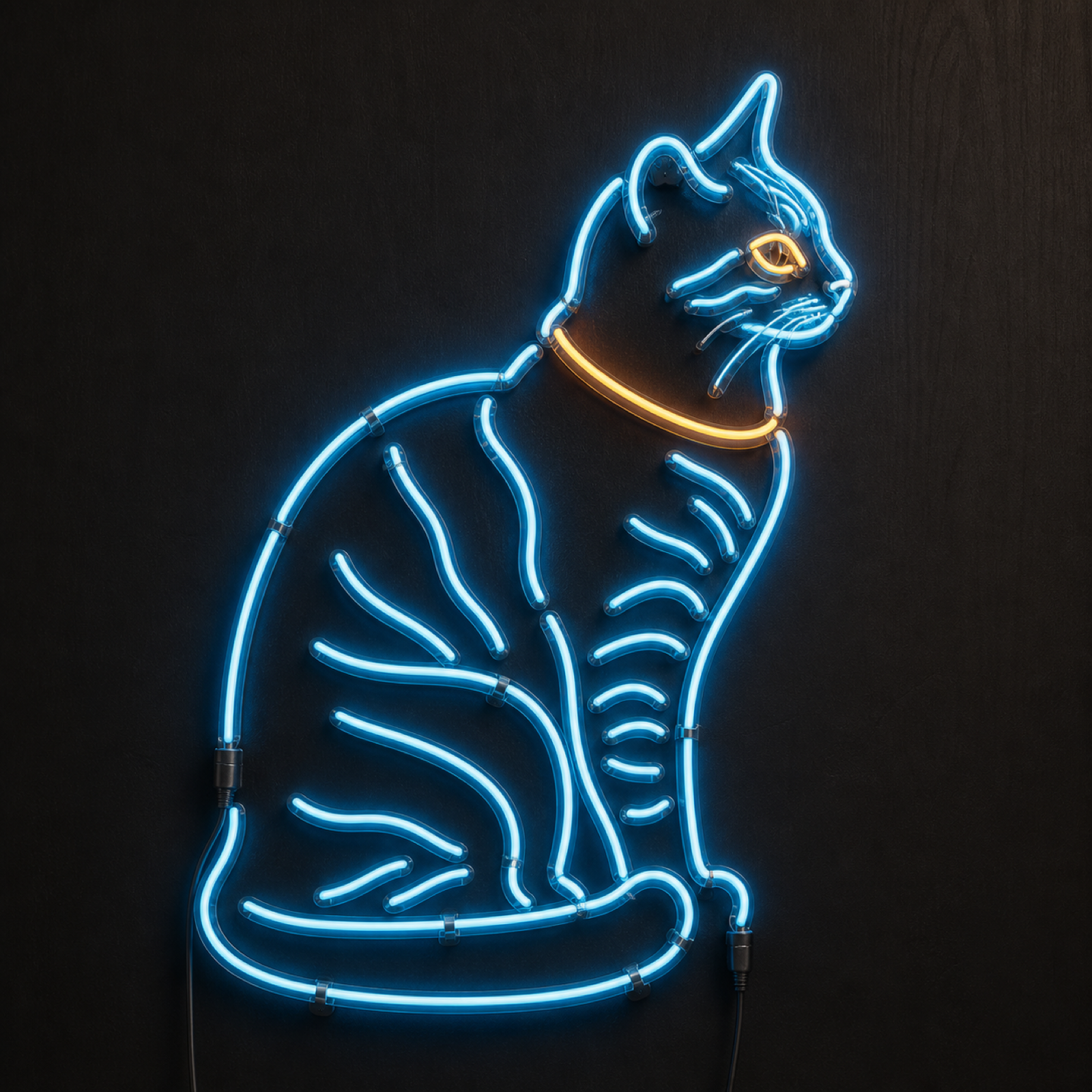
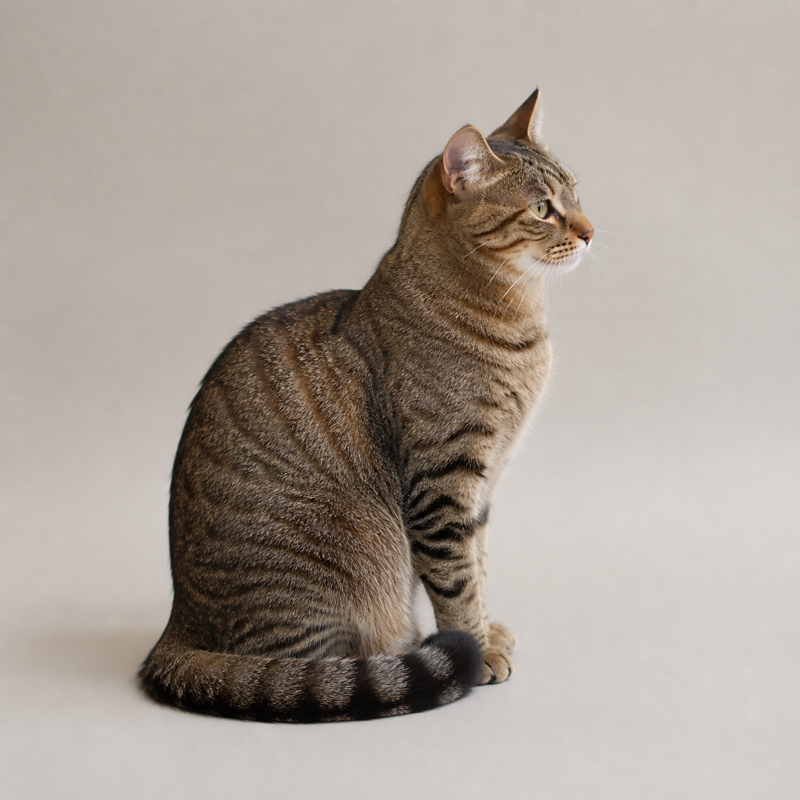
One treatment, two different photographs. A cocktail glass, which is nearly a line drawing already, and a cat, which is not — the second is where the fabrication rule gets tested and loses.
The tube itself is right in both runs: a white-hot core inside a coloured sleeve, one colour along each run, a tight halo rather than a soft cloud, and real unlit hardware — brackets, standoffs and a cable leaving the frame. The first run is the whole template working. The glass, stem and base are one continuous piece of warm white, the olive is a closed red loop, and the brick wall is genuinely lit by the sign, brightest behind the tubes and dark in the corners, which is the half that separates this from a glow filter. The second run breaks the rule the template exists to enforce. The cat's tabby stripes came back as short blue dashes floating inside the body, connected to nothing — exactly what the body forbids under `nothing floats` and `no line stops in mid-air`. They are there because they are what makes it read as a tabby, which is the pattern across this whole set: an instruction whose effect is to remove something recognisable does not bind. That run's wall is also barely lit compared with the first. Pick a subject whose character is in its outline rather than in its markings.
Generated for this library
Input
  Tubes       warm white for the glass and the stem; a
              single red tube for the olive
  Wall        a dark painted brick wall, the tube standing
              about a hand's width off it
  Photograph  cocktail.png (1254 x 1254)

Returned   1 image · 1:1 · the glass as a sign

paths      the glass, stem and base are one continuous
           warm white run; the olive is a closed red
           loop
core       a white-hot centre inside a coloured sleeve
           on every run
wall       dark brick, lit by the sign and falling off
           to dark corners
hardware   two mounting brackets and their wiring at
           the foot, unlit
floating   none here - the second run is where it goes
           wrong
words none, in any scriptYou fill in 2 fields — the braced lines at the top. Everything below them is fixed.
- 1The tube colours, and what each one draws
- 2The wall it hangs on, and how far off it
One Tube, Bent in One Piece
What this makes
Hand it a photograph and it comes back as a neon sign — drawn only in paths a glassblower could actually bend, with every run of tube ending at an electrode and lighting the wall it hangs on. Two fields.
You are given ONE photograph. Return ONE image: that subject built as a neon sign hanging on a wall. Follow every line. Replace only the FIELDS block; everything after it is fixed.
First — do you have the photograph and the fields?
Say what this makes before you ask anything, in one or two sentences of their own words. Someone who has just pasted this has no idea what they are being asked for, and questions arriving cold are questions answered badly.
If no photograph is attached, stop and ask for one. This bends a sign from a particular shape; there is nothing to bend without it.
If either field below still has braces around it, stop and ask. Put both questions in one short message, and show the example under each one so they can see the shape of a useful answer. Wait for the replies, then work. Never fill a brace yourself.
Ask in whatever language they are writing to you in. Translate the questions and the examples; do not make someone read English to tell you what they want.
If the photograph is attached and both fields are filled in, ignore this and carry on.
Fields — replace these two lines only
- The tube colours, and what each one draws: {a colour per run of glass}
- The wall it hangs on, and how far off it: {a surface, and a standoff}
The law everything else follows from
Everything about how the subject is drawn may change. Nothing about what is in it may.
The rendering becomes glass and gas. What is in the picture does not move: same subject, same angle, same proportions, same arrangement, same number of things. It is that photograph, bent.
Every line is a tube, and a tube has two ends
This is the whole rewrite, and it is a fabrication constraint rather than a look.
A neon sign is made of glass tubes. Each one is heated, bent by hand, and fitted with an electrode at each end. A run of light must therefore be a single continuous path from one end fitting to the other. From that:
- Nothing floats. Every lit line connects to the rest of its run. A stroke hanging by itself in the middle of the picture is impossible.
- No line stops in mid-air. It either bends and carries on, or it reaches an electrode. Those two facts kill most of what this genre produces.
- Count the runs and keep them few. A sign is a handful of pieces of glass, not fifty.
- A bend has a radius. Glass will not turn a sharp corner; every change of direction is a curve, and a tight one looks tight.
- Where a run has to cross a gap it goes dark, because the glass is painted out over that stretch — a real technique, and the honest way to draw two separate shapes on one tube.
- The tube is one thickness throughout. It never tapers, never swells, never fades away at an end.
What a lit tube actually looks like
- A white-hot core runs down the middle of the tube — nearly white, whatever the colour is.
- A coloured sleeve around that core, at full saturation.
- A tight halo on the glass itself, close in, not a soft cloud.
- The colour of a run is one colour along its whole length. No gradient from pink to blue down a single tube.
- Slight unevenness is right: a little flicker, one section fractionally dimmer, the gas a touch brighter near an electrode.
The sign is a light, so it lights things
- The wall behind is lit by the sign, brightest where the tube is closest and falling off with distance — clearly darker a hand's width away.
- The sign casts a soft shadow of its own tubes and hardware onto the wall, offset by the standoff the second field names.
- The wall keeps its own texture and colour where the sign does not reach. Brick still reads as brick.
- The tube colours tint the wall near them, mixing where two runs are close.
The hardware is there
- End fittings at both ends of every run: small ceramic or metal caps.
- Standoff pins or a backing plate holding the tubes off the wall.
- Wiring running from the electrodes to somewhere sensible — down, or back through the wall.
- Hardware is unlit metal. It does not glow.
Never
- Text, numerals, a caption, a signature or a watermark anywhere, in any script.
- A glow filter over a photograph, a bloom pass, a lens flare, star bursts or bokeh.
- Lines that float, fork, taper, stop in mid-air or change colour along their length.
- Shading, fill, texture or interior detail inside the subject.
- A border, a frame, a shopfront, a mock-up or a photograph of a sign in a room.
What it should read as
A sign somebody actually built — and if you followed a tube with your finger you would get all the way to the end of it.
The whole template, in one piece. The steps below are the entire workflow.
How to use it
- Copy the whole template with the button above.
- Attach the photograph and paste the template in the same message.
- Replace the two FIELDS lines. Give each colour its own job, because each colour is a separate tube.
- Trace one run with a finger. It should go from an end fitting, through every bend, to another end fitting, without ever leaving the glass.
- Look at the wall. If it is evenly lit, the run applied a glow filter rather than hanging a light in front of a surface.
What you swap
- The tube colours, and what each one draws
- warm white for the glass and the stem; a single red tube for the olive
- The wall it hangs on, and how far off it
- a dark painted brick wall, the tube standing about a hand's width off it
Before it runs
- A photograph, attached to the message, of something known by its outline. A sign is a few bent lines, so anything recognisable only by its surface will not survive.
- A subject simple enough to be drawn without lifting the pen many times. Every separate run of tube is a real piece of glass with two ends, and a picture needing forty of them is not a sign.
- A wall. The best half of a neon photograph is what the sign does to the surface behind it, and 'a dark background' is not a surface.
- Acceptance that detail goes entirely. Neon has no interior, no shading and no texture — only where the glass runs.
When to reach for it
When something should look like it hangs above a bar: a title card, a cover, a shopfront mock, a poster, a sticker. Templates in this genre ask for a glowing neon style and hand back a picture with a glow filter on it — floating strokes that start and stop in mid-air, which no piece of glass has ever done.
What changes
- One photograph in, one neon sign out — the subject reduced to bendable runs of tube.
- Every run is continuous from one electrode to the other, so nothing floats and nothing stops in mid-air.
- The tube has a white-hot core inside a coloured sleeve, which is what a real tube looks like up close.
- The sign lights the wall behind it, and the light falls off with distance instead of sitting as an even haze.
- One image, no type, no border, no lens flare, no bokeh.
Pairs with
- A Grade Moves No ShadowHand it a snapshot and it comes back graded — a named contrast curve, a named colour split, halation and grain — with every object, every shadow and the whole framing exactly where they were. Two fields.
- A Hole Has No Focal PlaneHand it a photograph and it takes the picture again through a pinhole — no lens, so nothing is ever truly sharp and nothing is ever more blurred than anything else, with the corners falling away because of simple geometry. Two fields.
- A Line at a Constant HeightHand it a photograph and it comes back as contour lines — every line a closed loop at one depth, none of them crossing, none of them stopping in mid-air, with the spacing doing all the shading. Two fields.