

Nobody Becomes a Relative
Hand it a photograph of several people and it comes back as one stylised group portrait — everybody still themselves, because you name what tells each of them apart. Two fields.
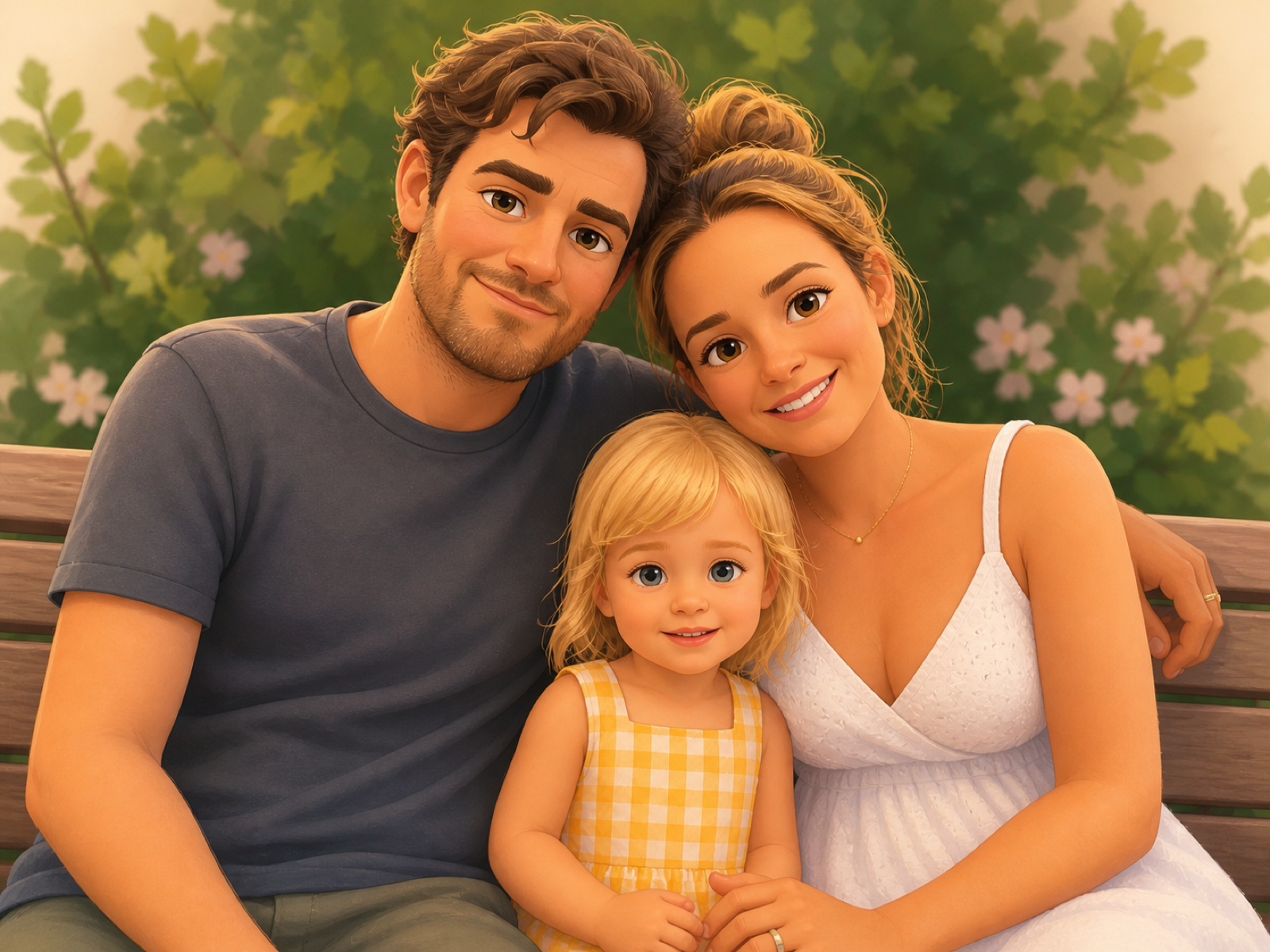
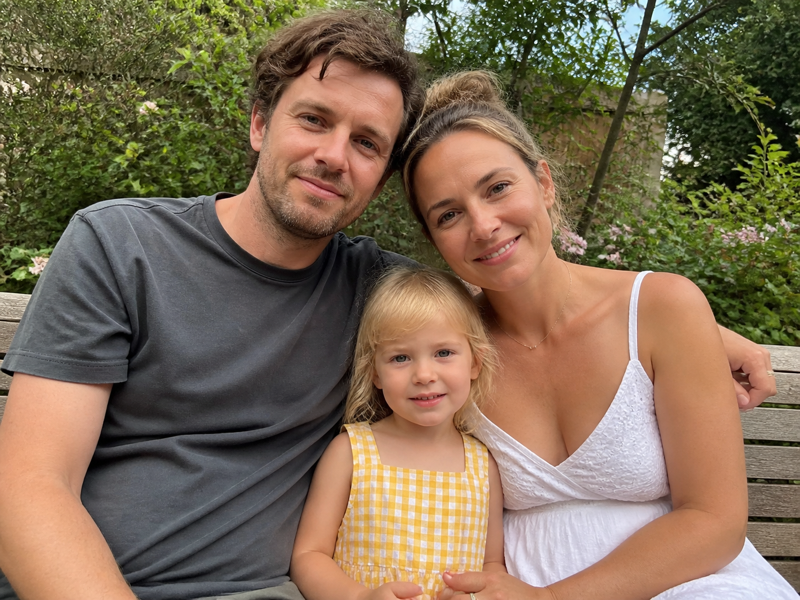
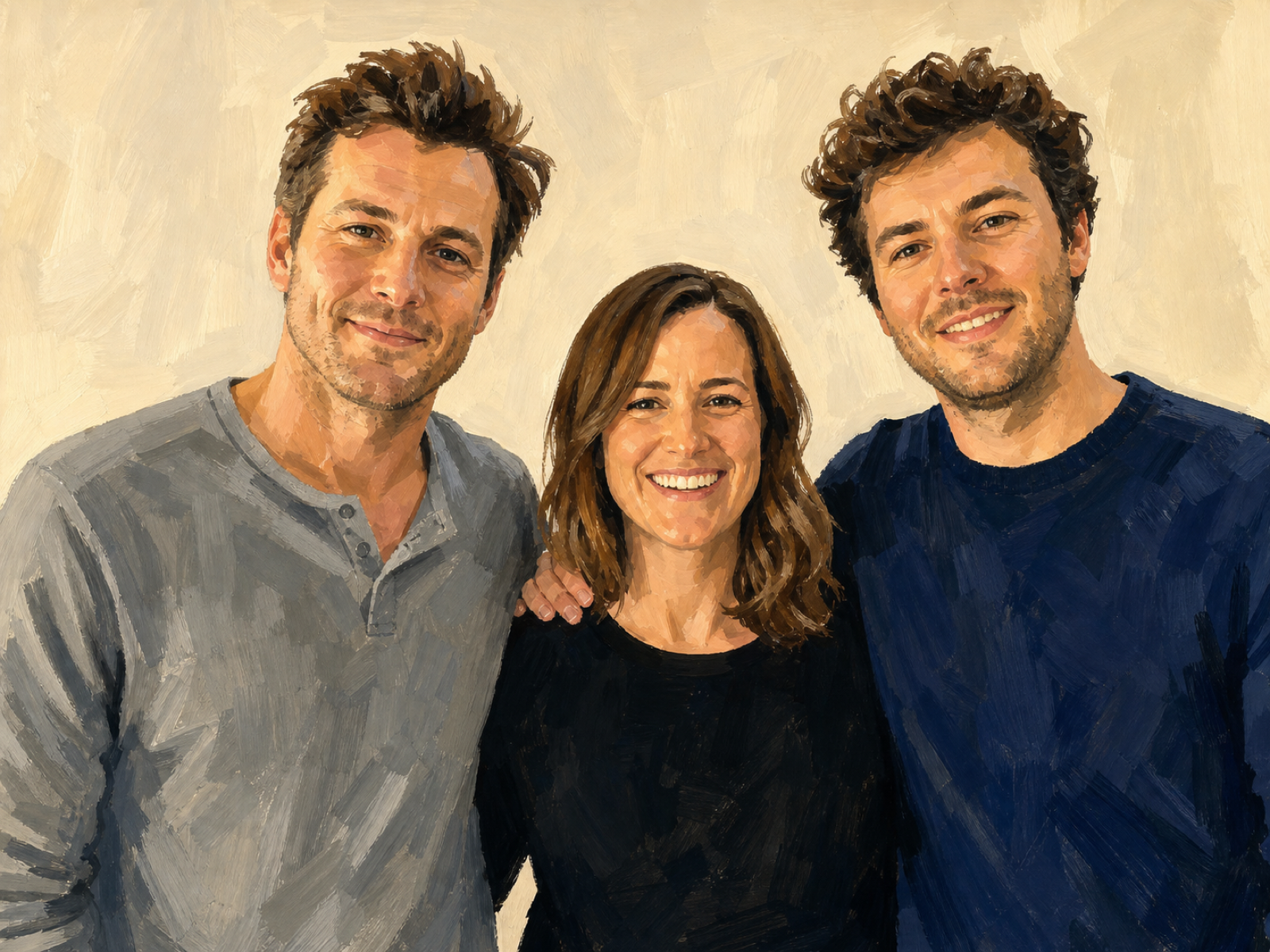
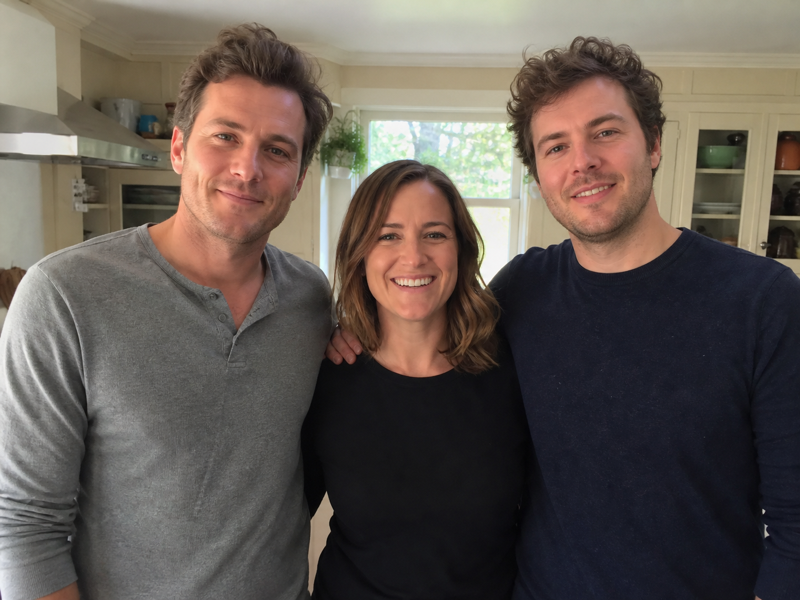
One treatment, two different photographs. A family on a bench in soft 3D and three grown siblings in gouache — one group with a child in it, one where two of the three are brothers and already look alike, which is the harder test of the two.
The thing this template exists for held on both runs: nobody converged. The brothers in the second picture stay tellable apart — the longer face and straighter hair on the left, the curls and rounder jaw on the right — which is the case where a run usually gives you the same man twice. Everyone named appears, in the order they stand, at the closeness they had, and the child is drawn with a child's proportions rather than as a small adult. Two things did not hold. The framing field was ignored on the first run: it asked for a slightly high camera and everyone head to knee, and the result is straight on and waist up. And the faces are prettier than the faces that went in, most visibly on the first run — which the template forbids by name in the same words that worked on the single-portrait skill, and here did not. Read this one as reliable about who people are and unreliable about how flattering it is being.
Generated for this library
Input
  Who         dad on the left, dark brows and a square
              jaw · the little one in the middle, blonde
              and about three · mum on the right,
              sun-streaked hair and a wide smile
  Style       soft 3D animation with cloth that reads as
              cloth, seen slightly from above, everyone
              head to knee
  Photograph  garden-bench.png (1254 x 940)

Returned   1 image · 4:5 · the three of them, stylised

people      three in, three out - nobody added and
            nobody dropped
apart       each one's named thing findable: the dark
            brows and square jaw, the blonde three-year-
            old, the sun-streaked hair and wide smile
ages        the child is drawn as a child - bigger head,
            shorter limbs, softer features
arrangement the photograph's - dad left, child between
            them, mum right, the same closeness
framing     not as asked: the field said slightly from
            above and head to knee, and it came back
            straight on and waist up
words none, in any scriptYou fill in 2 fields — the braced lines at the top. Everything below them is fixed.
- 1Who is in it, left to right, and what tells each apart
- 2The style, and how the group is framed
Nobody Becomes a Relative
What this makes
Hand it a photograph of several people and it comes back as one stylised group portrait — everybody still themselves, because you name what tells each of them apart. Two fields.
You are given ONE photograph of SEVERAL people. Return ONE image: a stylised group portrait of those same people. Follow every line. Replace only the FIELDS block; everything after it is fixed.
First — do you have the photograph and the fields?
Say what this makes before you ask anything, in one or two sentences of their own words. Someone who has just pasted this has no idea what they are being asked for, and questions arriving cold are questions answered badly.
If no photograph is attached, stop and ask for one. This is a portrait of particular people, so there has to be a picture of them.
If either field below still has braces around it, stop and ask. Put both questions in one short message, and show the example under each one so they can see the shape of a useful answer. Wait for the replies, then work. Never fill a brace yourself.
Ask in whatever language they are writing to you in. Translate the questions and the examples; do not make someone read English to tell you what they want.
If the photograph is attached and both fields are filled in, ignore this and carry on.
Fields — replace these two lines only
- Who is in it, left to right, and what tells each apart: {each person, in order, with one distinguishing thing}
- The style, and how the group is framed: {a way of rendering, a camera height, how much of them is in frame}
The law everything else follows from
Everything about how the subject is drawn may change. Nothing about what is in it may.
The rendering goes completely — photographic light, real skin, real cloth, all replaced by whatever the style field asks for. What survives is who these people are, how many of them there are, and where each one stands.
Faces in a group converge
This is the failure the genre has, and it is not the same failure a single portrait has.
With one face a run smooths it. With five it does something worse: it pulls every face toward a common average, so a family comes back as a set of siblings and a team comes back as one person at five ages. Hair colour ends up doing all the work of telling them apart.
The fix is the first field, and it is spent per person:
- Each person's distinguishing thing is drawn clearly, and is findable in the result. Point at it.
- No two faces in the picture may be interchangeable. If swapping two people's names would go unnoticed, the run has averaged them.
- Keep what separates them structurally — brow weight, jaw width, nose length, the set of the eyes, the shape of the hairline. Those differ more between people than any surface detail.
- Keep the asymmetries. They are per person and they are the cheapest recognition available.
Ages hold
- A child is drawn as a child — larger head relative to body, shorter limbs, softer features, smaller jaw. Not a small adult.
- An older face keeps its lines, its slacker jaw, its hairline. Not smoothed to a younger version of itself.
- Nobody is aged up or down from the photograph.
The arrangement is the photograph's
- The same number of people, in the same left-to-right order.
- The same closeness: who is touching whom, who is holding whom, who is leaning on whom, who is in front.
- The same rough heights relative to each other, allowing for the style's proportions.
- The same direction each person faces, and roughly the same expression each is wearing.
The style
Rendered as the second field asks, at the camera height it asks for, with the amount of each person it asks to be in frame. Whatever the style, materials read as themselves: cloth as cloth, hair as hair.
Background simple and unobtrusive — a plain wash, or the photograph's setting reduced to a few soft shapes. It is a portrait of the people.
Never
- A person added, a person removed, or a person moved to a different place in the line.
- Text, numerals, a monogram, a date or a watermark anywhere, in any script.
- A frame, a border, a card layout, a panel or a second version.
- Beautifying anybody: no slimming, no smoothing, no straightened teeth, no removed glasses.
- Props, pets or objects that are not in the photograph.
What it should read as
The same family, drawn — and everybody who knows them can say which one is which without being told.
The whole template, in one piece. The steps below are the entire workflow.
How to use it
- Copy the whole template with the button above.
- Attach the photograph and paste the template in the same message.
- Replace the two FIELDS lines. Go left to right in the order they stand, and give each person one thing — the thing you would say on the phone to describe which one they are.
- Check person by person before shipping, and check them against each other: if two of them could swap names, the faces have converged.
- Check the ages too. A child drawn at adult proportions is the other way this goes wrong.
What you swap
- Who is in it, left to right, and what tells each apart
- dad on the left, dark brows and a square jaw · the little one in the middle, blonde and about three · mum on the right, sun-streaked hair and a wide smile
- The style, and how the group is framed
- soft 3D animation with cloth that reads as cloth, seen slightly from above, everyone head to knee
Before it runs
- A photograph of the group, attached to the message, with every face visible. A face turned away cannot be kept recognisable.
- Permission from the people in it. A picture of a family is a picture of those people whatever style it is drawn in.
- One distinguishing thing per person, in your own words. This is the whole skill: without it the run averages every face in the group toward the same face.
- A group small enough to hold. Three to six people works; a crowd has more faces than any style can keep apart.
When to reach for it
When a snapshot of a group should become something to print or send: a family card, a leaving gift, a team page, a birthday. Templates in this genre ask that everyone stay recognisable and hand back a set of siblings — five faces averaged toward one another until only the hair colour tells them apart.
What changes
- One photograph in, one stylised group portrait out — the same people, the same number, in the same arrangement.
- Each person is anchored by the one thing you say tells them apart, which is what stops the faces converging.
- Ages hold: a child stays a child's proportions, an older face keeps its lines.
- The arrangement is the photograph's — who is beside whom, who is turned toward whom, who is holding whom.
- One picture, one style, no panels and no borders.
Pairs with
- The Studio Changes, the Face Does NotHand it any photograph of somebody and it comes back as a proper studio portrait of them — new light, new background, new styling, and a face that is still theirs down to the features you named. Two fields.
- Enlarge What Is Already LargeHand it a portrait and it comes back as a caricature that is still unmistakably them — because it only exaggerates what the photograph already had most of, in the order you rank it. Two fields.
- The Face Has Only Six MarksHand it a photograph of somebody and it comes back as a small handmade collectible figure of them — you name the few features that have to survive, because a toy face has room for about six. Two fields.