

A Grade Moves No Shadow
Hand it a snapshot and it comes back graded — a named contrast curve, a named colour split, halation and grain — with every object, every shadow and the whole framing exactly where they were. Two fields.
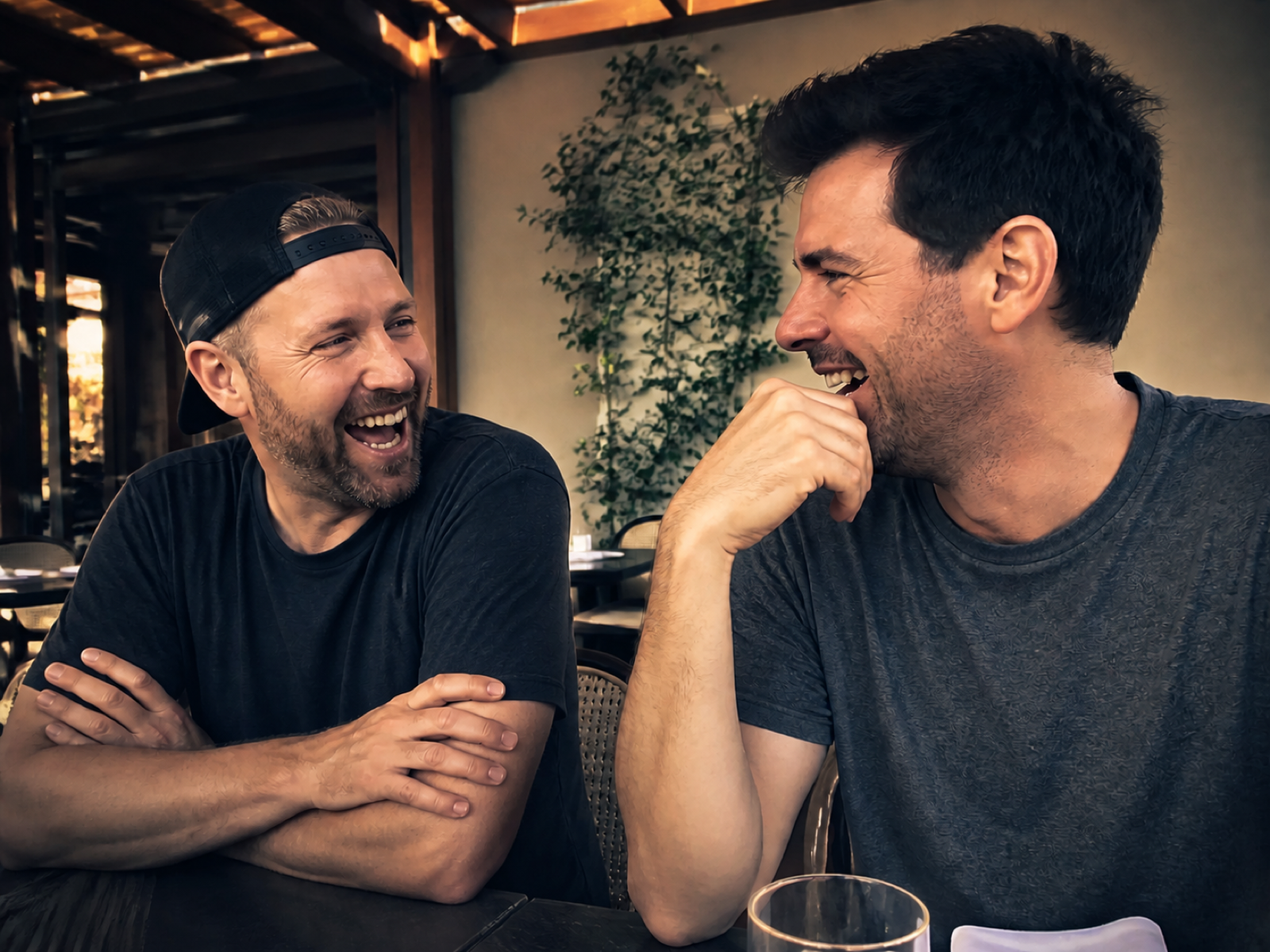
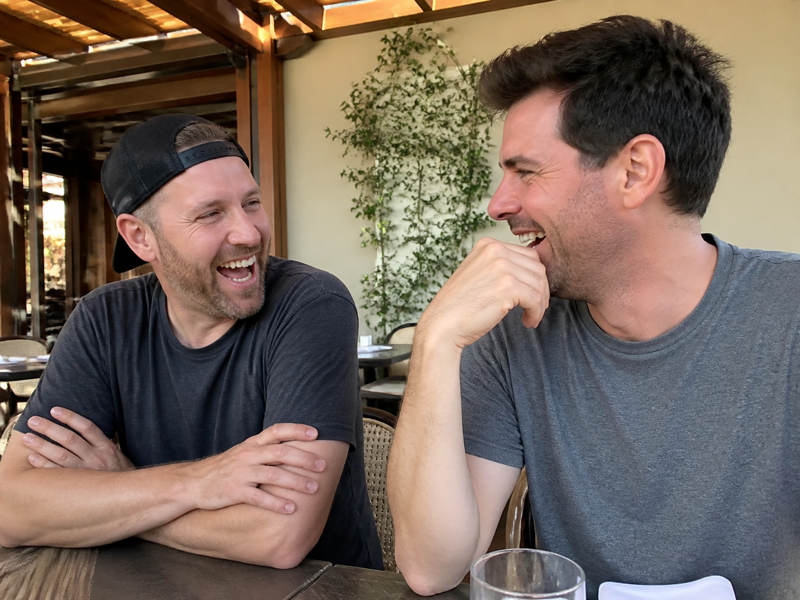
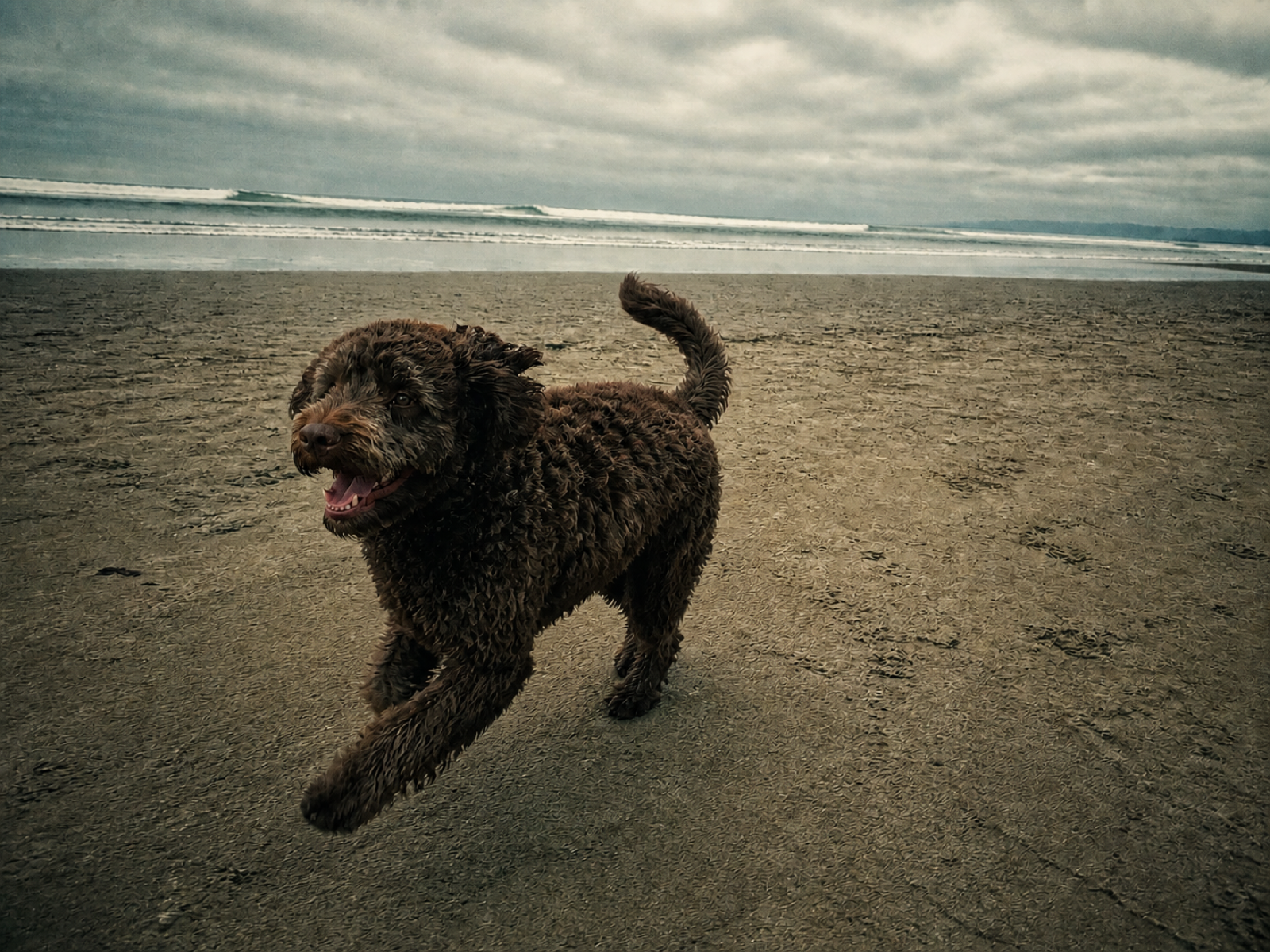
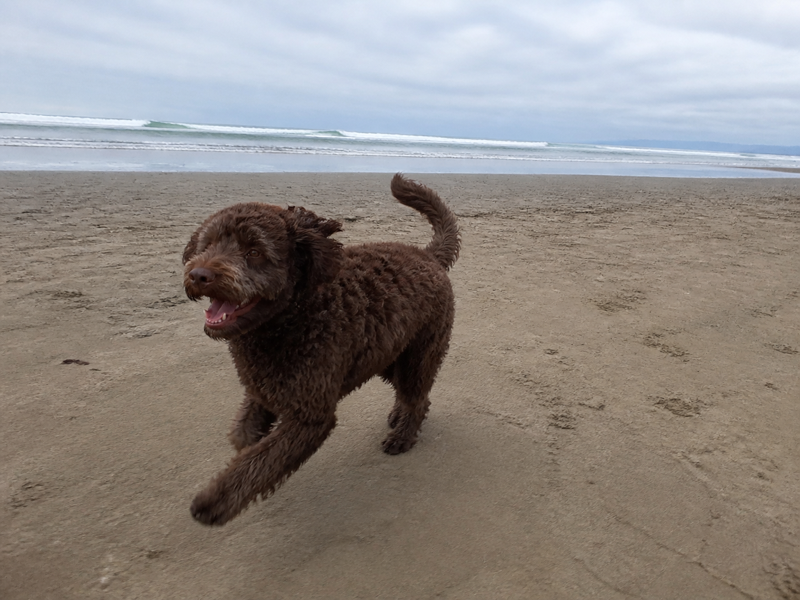
One treatment, two different photographs. Two snapshots and two opposite looks from the same five settings — a lifted, warm-highlighted grade on the table, a crushed, green-shadowed one on the beach. Neither run was given a film to imitate, only numbers to set.
The line holds on both. Put each result beside its original and every object is where it was, at the same size, and every shadow is at the same angle and the same length — deeper or lifted, never moved. That is the thing this genre gets wrong, and both runs got it right. The five settings behave as separate controls too: the same list produced a warm lifted look on one photograph and a cold crushed one on the other because the values differed, not because a film was named. One miss, on the beach: the sky came back with cloud structure that is not legible in the original, which is detail sharpened into existence rather than graded, and the template forbids exactly that. Look at flat areas — skies, walls, water — before shipping, because that is where a grade quietly becomes an invention.
Generated for this library
Input
  Look        black point lifted a little · shadows cool
              blue-grey, highlights warm amber · halation
              on the brightest speculars · fine grain ·
              background falling off darker and softer
  May glow    the glasses on the table, as if catching a
              light out of frame
  Photograph  friends-table.png (1254 x 940)

Returned   1 image · 4:3 · the same frame, graded

content    every object where it was - both people, the
           poses, the glass, the napkin, the planting,
           the chairs behind
shadows    unmoved: same angles, same lengths, deeper
           but not relocated
grade      black point lifted, shadows cool, highlights
           warm, halation on the speculars, fine grain,
           background falling away
glow       the glass, and only the glass, catching a
           light from outside the frame
words none, in any scriptYou fill in 2 fields — the braced lines at the top. Everything below them is fixed.
- 1The look, as its parts
- 2What may glow, if anything
A Grade Moves No Shadow
What this makes
Hand it a snapshot and it comes back graded — a named contrast curve, a named colour split, halation and grain — with every object, every shadow and the whole framing exactly where they were. Two fields.
You are given ONE photograph. Return ONE image: the same photograph, graded. Follow every line. Replace only the FIELDS block; everything after it is fixed.
First — do you have the photograph and the fields?
Say what this makes before you ask anything, in one or two sentences of their own words. Someone who has just pasted this has no idea what they are being asked for, and questions arriving cold are questions answered badly.
If no photograph is attached, stop and ask for one. There is nothing to grade without it.
If either field below still has braces around it, stop and ask. Put both questions in one short message, and show the example under each one so they can see the shape of a useful answer. Wait for the replies, then work. Never fill a brace yourself.
Ask in whatever language they are writing to you in. Translate the questions and the examples; do not make someone read English to tell you what they want.
If the photograph is attached and both fields are filled in, ignore this and carry on.
Fields — replace these two lines only
- The look, as its parts: {a black point, a colour split, halation, grain, falloff}
- What may glow, if anything: {one thing already in the frame, or the word nothing}
The law everything else follows from
Everything about how the subject is drawn may change. Nothing about what is in it may.
A grade is the mildest thing that law permits: the rendering of the frame changes completely, and the frame's contents do not change at all. Every object stays, at the same size, in the same place, facing the same way, at the same distance from the camera.
A grade moves no shadow
This is the line, and it is the one templates in this genre cross.
Grading changes how light already in the picture is rendered. It does not change where that light came from. So:
- Every shadow stays where it is, at the same angle, the same length and the same softness. It may go deeper or lift; it may not move.
- Every highlight stays on the surface that had it. A grade can make a highlight hotter or roll it off; it cannot put one on a face that was flat.
- The key does not change direction. If the light came from the left it still comes from the left.
- No new light source. No rim from behind, no practical in the background, no shaft, no bounce that was not there.
If the result would need someone to have moved a lamp, it is a relight and not a grade.
The look, part by part
Read the first field as five separate settings and apply each one:
- Black point — where the darkest tone sits. Lifted gives a faded, filmic base; crushed gives contrast and lost shadow detail.
- Colour split — one hue in the shadows, another in the highlights, stated separately. This is what most people mean by a look.
- Halation — a soft warm bleed around the brightest speculars only, a few pixels wide. Not a glow over the whole picture.
- Grain — fine, even, present in the midtones, not a texture laid over the top.
- Falloff — how much darker and softer the background goes relative to the subject. A vignette is the crudest version of this; prefer depth.
Nothing outside those five. No bloom, no light leaks, no dust, no scratches, no chromatic aberration, no lens flare, unless a field above names it.
The glow
If the second field names something, that one object may gain a specular or a soft glow as if catching light from outside the frame. It is the only new light permitted, it lands on that object only, and it casts nothing.
If the field says nothing, no glow appears anywhere.
Never
- A change to the framing: no crop, no straighten, no resize, no extension.
- Anything added or removed — no rain, no neon, no smoke, no fog, no crowd, no reflection that was not there.
- Sharpening detail into existence: a soft edge stays soft, a blurred face stays blurred.
- Text, numerals or a watermark anywhere, in any script.
- A border, a frame, a film-strip edge or a mock-up.
What it should read as
The same photograph, printed by somebody who knew what they were doing — and if you put the two side by side, every object and every shadow lines up.
The whole template, in one piece. The steps below are the entire workflow.
How to use it
- Copy the whole template with the button above.
- Attach your photograph and paste the template in the same message.
- Replace the two FIELDS lines. Write the look as a list of parts; each part is something you can turn up or down next time.
- Check the shadows before shipping: they should be the same shadows, in the same places, at the same angles. A moved shadow means the run relit the picture instead of grading it.
- For a set, run each picture from the same first field, and they will sit together.
What you swap
- The look, as its parts
- black point lifted a little · shadows cool blue-grey, highlights warm amber · halation on the brightest speculars · fine grain · background falling off darker and softer
- What may glow, if anything
- the glasses on the table, as if catching a light out of frame
Before it runs
- An actual photograph, attached to the message. There is nothing to grade without one.
- A look described as parts rather than as a name. 'Blade Runner' and 'cinematic' get you a different picture every time; a black point, a colour split and a grain size get you the same one twice.
- A picture already composed the way you want it. This changes how the frame is rendered and nothing about what is in it — if the framing is wrong, grading will not fix it.
- Somewhere for the light to be, if you ask for a glow. A specular that has nothing to catch reads as a smudge.
When to reach for it
When a picture is the right picture and the wrong flavour: a phone shot that has to sit beside a campaign, a listing photo that needs a house look, a snapshot you want to feel like a still. Templates in this genre say cinematic and hand back a different photograph — relit, recropped, with a glow somewhere nobody asked for.
What changes
- One photograph in, one out — the same frame, given a look made of named parts rather than a genre word.
- The look is five things you can change one at a time: black point, colour split, halation, grain, background falloff.
- No shadow moves. A grade is not a relight, and that is the line this template holds.
- Nothing is added, removed, sharpened into existence or cropped away.
- Repeatable across a set, because the same five values give the same look on a different picture.
Pairs with
- A Hole Has No Focal PlaneHand it a photograph and it takes the picture again through a pinhole — no lens, so nothing is ever truly sharp and nothing is ever more blurred than anything else, with the corners falling away because of simple geometry. Two fields.
- A Line at a Constant HeightHand it a photograph and it comes back as contour lines — every line a closed loop at one depth, none of them crossing, none of them stopping in mid-air, with the spacing doing all the shading. Two fields.
- Contrast Dies With DistanceHand it a photograph and it takes the picture again in fog — where contrast falls away by the same fraction every few paces, so the near thing keeps every bit of its own and the far thing is simply gone. Two fields.